
“Modern work demands knowledge transfer: the ability to apply knowledge to new situations and different domains.”
– David Epstein
In his book Range, author David Epstein makes the case that shallow and wide generalists have become more powerful than narrow, deep specialists.
Having access to a wide variety of different bodies of knowledge gives the generalist the ability to make unexpected connections between vastly different ideas.
In a study of Nobel Laureates, researchers found that winners of the Nobel Prize were 22 times more likely to pursue amateur artistic hobbies, compared to other scientist.
At least 1 Nobel Prize has been attributed to a messy desk. When Leon Heppel found 2 unrelated research papers buried in different layers of mess, his combination of these ideas lead to a winning breakthrough.

The Generalist in the Age of AI
If the Internet gave us all access to infinite information, Artificial Intelligence has given us all access to infinite skills.
You don’t need to be a programmer with a Computer Science degree to use a Python library in a vibe-coded app. All you have to do is ask the right questions, in clear language.
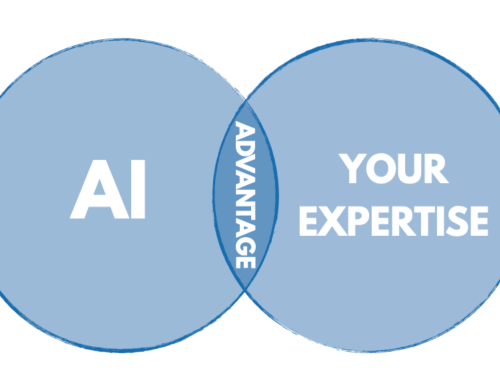
This is why prompting is the skill of the future. Professionals who become proficient AI operators will be able to leverage their generalist skills to implement multiple specialisations in parallel.
🛠️ (24:17) The AI Corner Episode 29
The Future of Intelligence is Agentic 🛠️
I’ve been leading training workshops for Agentic Intelligence, where I have joined as their Head of Learning & Enablement. You can see some of the workshops I lead here: https://agenticintelligence.co.nz/training
Reach out if you’d like to discuss an in-person workshop in Christchurch, or a webinar series for your team.





Leave A Comment